
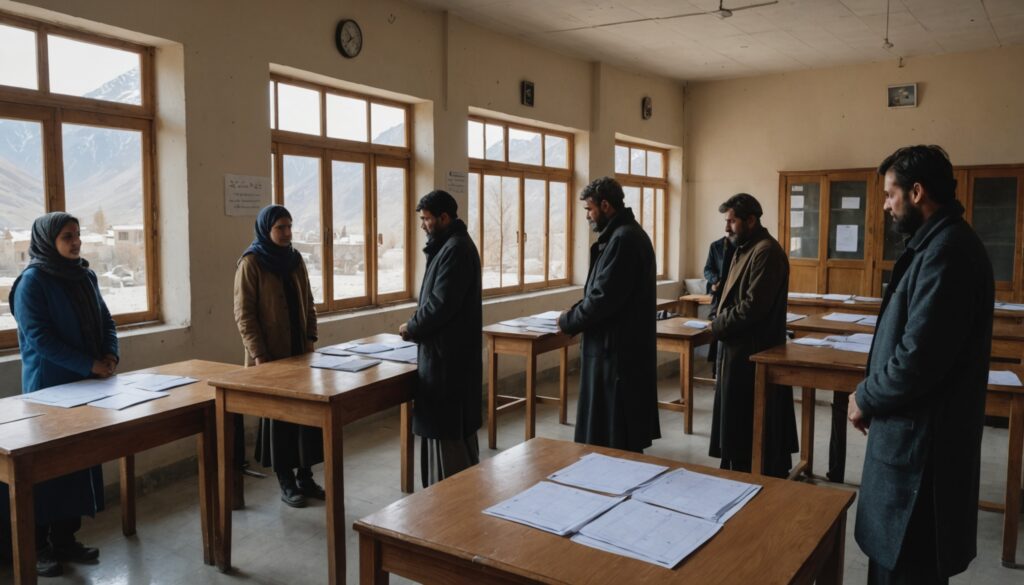

The ballots have been counted in Gilgit-Baltistan, and what emerged is something the federal establishment in Islamabad probably did not want to see so clearly reflected in the numbers. Voters in the territory delivered results that suggest fatigue with old political arrangements.
Election Night in the Mountains
What happened in these polling stations matters more than most in Lahore or Karachi realize, because Gilgit-Baltistan sits at the intersection of Pakistan’s regional ambitions, China’s Belt and Road calculations, and a population that has learned to demand something closer to actual representation. The territory has been governed under a special constitutional arrangement for decades—neither fully a province nor treated like one—and that status has bred a specific kind of political consciousness. People here vote knowing their vote carries less institutional weight than it would in Punjab, yet they vote anyway. That alone tells you something about what was at stake.
Turnout figures and seat distributions will matter to party strategists calculating alliances. Independent candidates performed significantly better than expected, which deserves serious attention rather than dismissal as a protest vote. The reason is structural: voters in smaller constituencies, where everyone knows someone, tend to break with national party machines when those machines have delivered little. Independents secured unexpected ground because the dominant narrative from Islamabad—that stability requires strong centralized party control—has worn thin among voters who manage their own stability every day. Infrastructure gaps remain. Development funds promised in 2020 campaigns still haven’t materialized in villages outside Gilgit city proper. You can track voter frustration through this lens across Skardu, Hunza, and the western districts.
What GB Elections 2026 Results Mean for Federal Power
The deeper question is whether Islamabad treats this as a warning or as noise. Elections in Gilgit-Baltistan historically get analyzed through a security lens—how do results affect border stability, how do they interact with Delhi’s competing claims—rather than through a democracy lens. That frame misses what voters were actually saying. They were not voting on geopolitics; they were voting on whether anyone in power listens to them. Analysis available on TheCapital.pk suggests that economic grievance drove more decisions than ideology did, which is worth examining closely before next election cycles begin.
For an ordinary person in Rawalpindi or Multan, this election might seem remote. It is not. If the federal government cannot manage legitimate political expression in a smaller, more controllable territory, the lesson it learns—or fails to learn—will shape how it handles dissent elsewhere. When independent candidates win by running against the idea that Islamabad knows what Gilgit-Baltistan needs, that is a signal worth heeding. The next government will have to choose: respond with actual devolution of decision-making power, or respond with tighter control dressed up as unity. History suggests which path institutions usually take.
What this means in practical terms is simple. Electricity bills will not drop faster because independents won seats. Roads will not be completed by next spring. But if the new elected representatives can negotiate directly with federal agencies without going through party hierarchies in Islamabad, if they can actually spend allocated budgets on local priorities rather than seeing funds diverted to provincial capitals, then something real has shifted. That is the only measure that matters to someone trying to keep lights on in Hunza Valley or expand a school in Shigar.