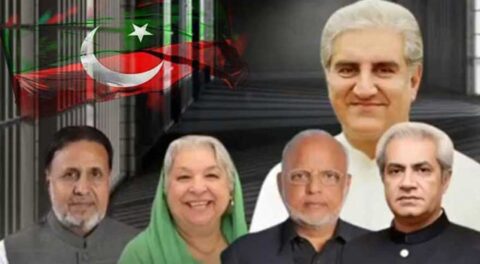


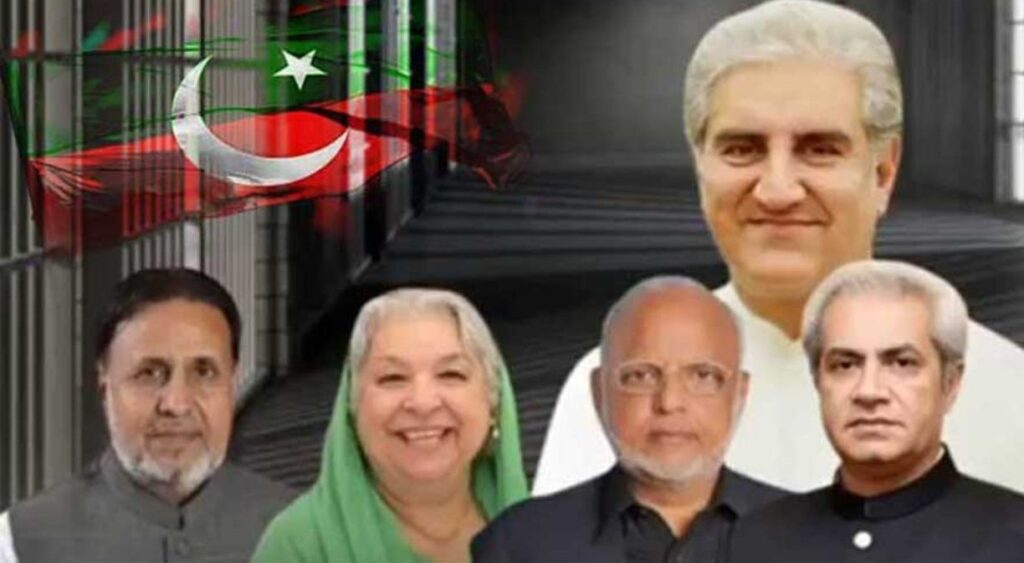

Five imprisoned PTI figures sent a letter from Kot Lakhpat Jail this week challenging the government’s economic priorities. Shah Mahmood Qureshi, Dr Yasmin Rashid, Omar Sarfraz Cheema, Ejaz Chaudhry and Mian Mahmoodur Rasheed want the opposition to reject a ‘Charter of Economy’ and demand something broader instead.
The pitch to Mehmood Khan Achakzai, Allama Raja Nasir Abbas and Barrister Gohar Ali Khan is straightforward: Pakistan won’t fix its money problems until it fixes its political ones. The five leaders argue economic stability cannot exist without constitutional supremacy and political certainty.
This isn’t new talk. But timing matters. Prime Minister Shahbaz Sharif recently invited opposition parties to sign a Charter of Economy—a formal agreement on fiscal policy and continuity regardless of which party holds power. It’s a reasonable enough proposal for a country that swings between governments every few years, each one reversing the last guy’s policies.
Why they think economy charters miss the point
The jailed leaders’ argument hinges on a specific diagnosis: Pakistan’s crisis is constitutional, not just fiscal. Investment won’t flow, they claim, where courts can overturn elections, where institutions ignore constitutional boundaries, and where voters don’t trust the system will respect their choice. You can write all the economic rules you want. They’ll collapse if the political ground shifts.
Their proposed ‘Charter of Pakistan’ would require consensus on six items: constitutional supremacy, electoral mandates, ending political engineering, institutional boundaries, non-discriminatory accountability, and protection of policies across government changes.
The letter compares it to painting a building with weak foundations. You can refresh the walls all you want. Without a solid base, it collapses anyway.
That framing reveals something: these five men are reading the room differently than the PM. Sharif is betting that political parties will cooperate on narrow economic goals because they all benefit. The jailed PTI figures say that won’t work if nobody trusts the system itself won’t rig the next election or ignore court orders.
The message from inside a cell
There’s obvious irony in imprisoned opposition figures urging the opposition to make demands of the PM. But the letter’s real audience isn’t necessarily Achakzai or Abbas. It’s the public record. Sending legal arguments through counsel ensures these points appear in court filings, media coverage, and the historical record.
The five cite successful economies—America, Germany, Singapore—arguing they established political stability first, then built wealth. That’s selective history. But it’s also a message to opposition parties: don’t take a narrow economic deal when you could demand institutional safeguards.
Will Achakzai, Abbas or Gohar actually push the government toward a constitutional charter instead of an economy one? The letter urges them to do so. Whether they do depends on whether they believe constitutional stability is worth more leverage than signing an economic deal right now.