
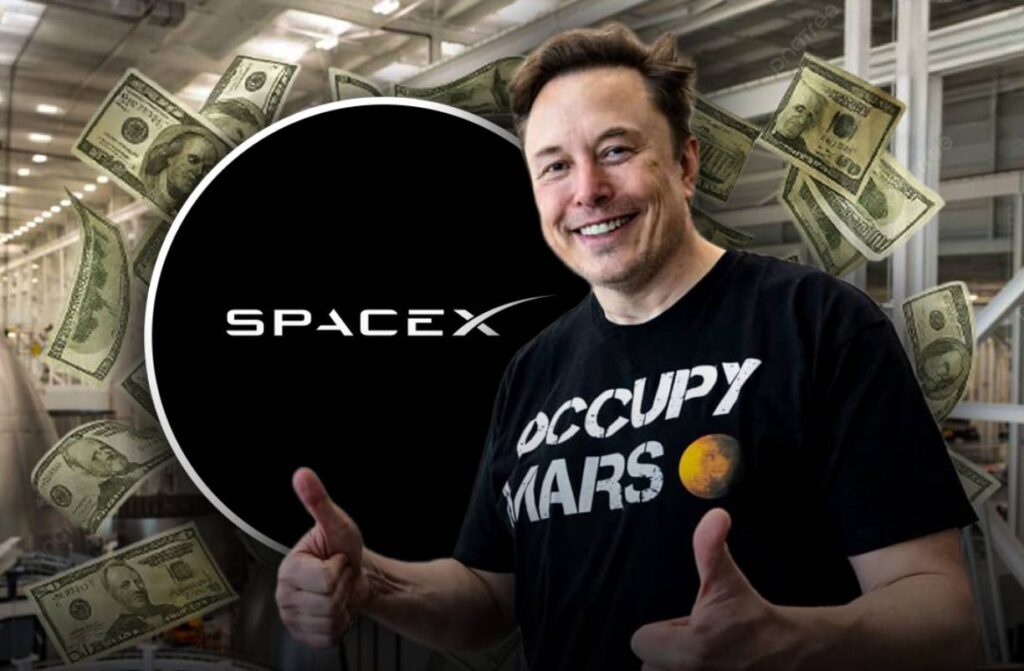

One man now holds a trillion dollars.
Elon Musk crossed into unprecedented territory this week when SpaceX priced its initial public offering at $135 per share, raising $75 billion and vaulting him past every billionaire who came before. His net worth will exceed $1.1 trillion when trading begins on Friday—a figure that sits somewhere between the GDP of Spain and Canada. The second-richest person on Earth possesses less than one-third of what Musk now commands. This is not hyperbole. This is the moment wealth concentration reached a threshold that feels almost abstract.
Most of us in Karachi, Lahore, and the smaller cities where real Pakistani lives happen have never truly reckoned with what a trillion means. Our entire national budget last year sat around 12 trillion rupees—roughly $45 billion. Musk’s personal wealth now exceeds Pakistan’s annual government spending by twenty times over. One person. One man’s stake in SpaceX alone comes to roughly $866 billion. He does not run a government, yet he wields the financial gravity of one.
The Architecture of Untouchable Power
What makes this different from previous billionaire moments is how Musk engineered it. He did not merely accumulate wealth through one company—he built a constellation. Tesla generates the energy narrative. SpaceX commands the future of space and satellites. X, formerly Twitter, gives him a direct broadcast channel to hundreds of millions of users where he speaks without filter, without editor, without institutional restraint. When he decided to enter American politics as a kingmaker, when he positioned himself in Trump’s Department of Government Efficiency, nobody could stop him because nobody can afford to. He already owns the megaphone. His companies own the future infrastructure. His wealth now transcends the normal mechanisms by which democracies theoretically constrain individual power. You can read more on TheCapital.pk about how global wealth concentration is reshaping markets.
The SpaceX IPO itself reveals something darker beneath the celebration. The company lost money last year, yet it is now valued at $1.77 trillion—ranking seventh among all American listed firms despite generating a fraction of their revenue. This is not investment based on profit. This is faith. This is a bet that tomorrow’s world will be so different, so fundamentally reshaped by space travel and satellite internet, that today’s losses do not matter. Investors are pricing in a future only Musk can deliver. That is power beyond money.
What Pakistan’s middle class should actually fear
For a Pakistani reading this on their lunch break in Faisalabad or Sialkot, the question is not whether Musk deserves his wealth. The question is what his trillion dollars means for your children’s economic reality. When one individual controls the infrastructure of communication, energy, and space exploration, when his political influence reshapes governments, when entire industries reorganize themselves around his vision—the middle class does not benefit. The middle class becomes structurally dependent. You need his satellites for internet. You need his electric cars because the old economy is dying. You need his approval, in effect, because he owns the future’s front door. That is the architecture of what we are watching.
This matters here because Pakistan’s economy survives through adaptation, through small and medium enterprises that learn to compete globally, through innovation that bubbles up from necessity. But when global capital flows toward one man’s vision, when venture funding chases space rockets and electric cars and neural interfaces instead of local solutions, when the world’s imagination becomes colonized by one billionaire’s ambitions—Pakistan’s entrepreneurial class feels that gravity pull. The best minds chase the highest valuations. The highest valuations go where Musk points. That is not abstract. That is the leakage of opportunity.