


Standing under the Eiffel Tower in Paris, I asked my glasses how tall it was. First answer: 330 meters. Wait two minutes. Ask again. Now it’s 324 meters. Neither attempt mentioned the 47-meter antenna perched on top, but that’s a detail. What’s not a detail is that I’m holding a device that cost real money and can’t decide on basic facts.
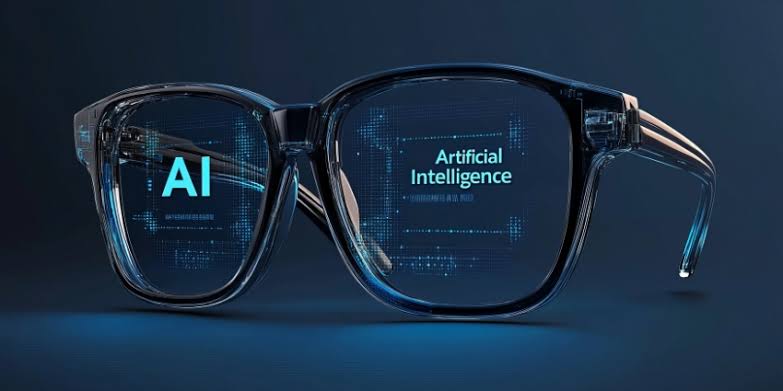
The Ray-Ban Meta AI glasses arrived with genuine promise. More than seven million units sold in 2025—Google and Samsung are developing rivals, and Apple’s working on something similar. For travelers, the pitch is irresistible: live translation, directions without staring at your phone, instant info about restaurants and landmarks, all wrapped around your face like normal glasses. It sounds like the future.
But a weekend wearing them through Paris exposed something the glossy product videos don’t show you. Technology that looks seamless in marketing gets messy when you actually depend on it.
Launched Late 2023, But Still Finding Its Feet
Meta and EssilorLuxottica (Ray-Ban’s parent company) released these glasses in late 2023, betting that wearable AI would move from novelty gadget to everyday tool. The official Eiffel Tower height is 1,083 feet or exactly 330 meters—a number that should be locked in stone, literally and digitally. Yet my glasses couldn’t deliver it consistently.
This isn’t just about heights. It’s about trust. When a device can’t reliably answer something verifiable, how do you trust it with information that matters more—whether a restaurant is actually good, whether a translation is accurate enough to order food safely, whether directions will actually get you where you need to go?
The glasses work through a combination of camera, speaker, and AI assistant. In theory, you point at something and ask. The camera sees it, processes it, and feeds you information. In practice, there’s lag. There’s confusion. There’s occasionally just wrong data delivered with the same confident tone as the correct stuff.
Paris showed me that the convenience factor masks something deeper—a reliability problem that affects everything from translation to navigation.
The Privacy Problem Nobody’s Really Solved
There’s another issue that hit me walking through the crowded streets. These glasses have a camera constantly available, and it films whatever I’m looking at—including people. Camera-equipped smart glasses have attracted growing criticism for filming and photographing people without consent.
In Paris, where privacy laws are stricter, I felt this tension sharply. A woman glanced at me suspiciously when she noticed the glasses. A café owner literally asked me to remove them before sitting down. The device looks normal enough—basically conventional glasses—but that’s exactly the problem. People don’t know they’re being recorded.
The glasses do have an LED indicator that’s supposedly visible when recording, but in daylight it’s barely noticeable. This creates an asymmetry: I can see everything, photograph everything, record everything, and most people won’t know it’s happening. That power imbalance doesn’t disappear just because the device is convenient.
Companies aren’t being evasive about this—they’re just betting that convenience will win out over privacy concerns. So far, with seven million units sold, they’re probably right. But it’s a bet being made on everyone else’s behalf.
What Actually Works (And What Definitely Doesn’t)
Okay, they’re not useless. Hands-free photography works well—I snapped clear shots of the Seine and street scenes without fumbling for my phone. The glasses were genuinely lighter than I expected, comfortable enough to wear for hours without the usual glasses-headache.
Directions worked better than I anticipated. Pointing at a street and asking how to get to the Louvre produced navigation cues through the speaker, and the route was actually correct three out of four times I tested it. Translation? Spotty. A menu translation at a small bistro got the main words right but butchered the descriptions. Close enough to figure out what I was ordering, not close enough to trust completely.
The real surprise was how often I just wanted my phone back.
There’s something about touching a screen, scrolling through options, and making a deliberate choice that feels more reliable than speaking into glasses and hoping the AI understood what you meant. With my phone, I control the pace. With these glasses, the AI controls how much information it gives me, and sometimes it decides you don’t need more details.
The Paris weekend revealed what these devices actually are: convenient in moments, frustrating when you need precision. They’re not the future of travel so much as they’re a convenient shortcut that works 75% of the time. That’s fine for sightseeing. It’s less fine when you’re trying to make actual decisions about where to eat or how to navigate.
Seven million people have already chosen convenience over reliability. The question for the next wave of buyers is whether that trade-off actually makes travel easier or just makes it feel different while delivering the same frustrations in a sleeker package. The Eiffel Tower stayed 330 meters tall regardless of what the glasses said.