


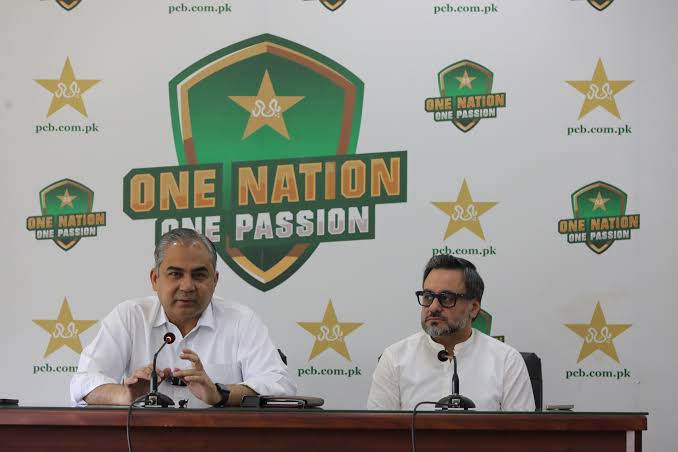

Pakistan Cricket Board Chairman Mohsin Naqvi announced Monday that the board will no longer evaluate Test specialists and T20 players under identical contract criteria—a structural change that marks a deliberate pivot away from decades of consolidated grading. The decision, rolled out in Lahore, reflects mounting pressure to standardise player assessment across formats that demand fundamentally different skill sets and career trajectories.
For years, the PCB’s central contract process invited predictable criticism. Why was player A placed in Category B while player B landed in Category C? Naqvi framed the new structure as an answer to this recurring complaint. The board claims 85% of contract decisions now rest on data rather than discretion.
The chairman was careful to clarify what the new system isn’t. He pushed back against comparisons to artificial intelligence, insisting instead that the PCB had simply begun treating domestic cricket performance, fitness records and format-specific requirements as measurable inputs. Whether this distinction holds much weight depends on how transparent the algorithm actually becomes—something the board hasn’t yet detailed publicly.
Why Format Separation Matters Now
Naqvi acknowledged what most cricket observers already know. Pakistan’s team performs reasonably well in bilateral series but falls apart in tournament settings—a pattern that persists despite rotating captains, coaches and selection committees. The PCB’s reasoning is straightforward: you cannot fairly compare a batsman who plays 15 Test matches annually with a fast bowler who appears in 25 T20 games and domestic competitions across the same period. The board reviewed five years of format-specific participation before designing the new grades.
Other boards still lump Test specialists and franchise players into single categories, forcing direct comparison between fundamentally different career paths. The PCB, Naqvi argued, had decided to recognise each format’s distinct demands. Whether this genuinely improves player development or simply redistributes the same limited resources across new categories remains an open question.
A Transparency Test Ahead
Naqvi noted his consultations with former players including Younis Khan, signalling that the board recognises the political sensitivity around contract decisions. Selection committees historically faced pressure from critics claiming favouritism, regional bias or loyalty to particular coaches. Moving 85% of decisions into a data-driven framework could theoretically insulate the PCB from such accusations—or it could create a new opacity if the metrics themselves go unexplained.
The chairman admitted candour on one point: he was unfamiliar with whether the old system had operated unchanged for 70 years. This honest gap in institutional memory suggests the PCB hadn’t conducted a thorough audit of its own practices before Naqvi’s tenure. Whether the new contract structure actually solves Pakistan’s recurring tournament failures depends less on the algorithm and more on whether selection committees use those data inputs to make bolder, faster decisions about squad composition.
The real test won’t arrive with the announcement. It arrives when selectors face pressure to drop a senior player mid-tournament and must defend that choice through transparent criteria. That’s when we’ll know if the PCB’s data-driven model holds substance or serves mainly as cover for the same familiar patterns.