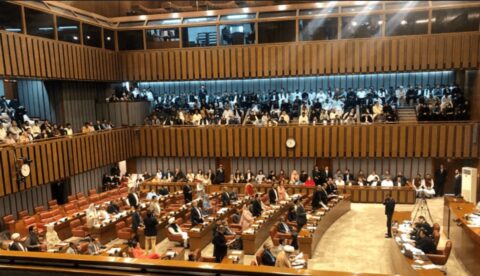



Rashid Mahmood Langrial, chairman of the Federal Board of Revenue, made an unusual admission Wednesday: the tax authority has been arming its own officers with sensitive financial data they promptly abuse. In testimony to the National Assembly Standing Committee on Finance, he outlined a coming overhaul designed to remove the human element entirely from initial tax processing. The pilot launches in October.
What triggered this? 8,697 individuals held Rs750 billion in deposits while reporting zero income. That kind of discrepancy should be straightforward to investigate. Instead, Langrial said, officers either weaponized the information for personal leverage or buried it. “We were equipping our officers with rich information, who were manipulating it for their own benefits,” he told the committee. The pattern repeats: deposit a large sum, claim no income, exploit the information gap between citizen and taxman.
The corruption math is brutal. A 1% rise in Pakistan’s corruption index correlates to a 4.57% drop in tax-to-GDP ratio. The country ranks worst in South Asia on Political Risk Services’ graft measure—52 out of 100. That’s not abstract. That’s revenue bleeding out through officer handshakes.
How the New System Removes Discretion
The redesign splits tax assessment into separate audit and assessment wings. When a taxpayer’s file gets flagged by automated risk detection, the system randomly assigns it to an officer—no choice, no shopping for pliable investigators. A separate quality control unit then reviews the assessment before anything reaches an audit specialist. E-hearings happen without face-to-face contact. Full rollout takes three years; pilot starts October.
Langrial’s pitch rests on a specific premise: human discretion breaks tax enforcement. When the same officer conducts audit, assessment, enforcement, and recovery, outcomes weaken. Collusion becomes easier. The blind between taxman and taxpayer works both ways—officers can’t see faces, but the system sees all transactions, all assets, all variance between claimed and actual income.
The numbers on underreporting are damning. 98.9% of high-deposit individuals materially understated their bank flows despite being registered filers. Among major property buyers, 80% under-declared assets. These aren’t edge cases. They’re the documented pattern of Pakistan’s wealthy systematically misrepresenting their means to the taxman while using that same misrepresentation as leverage against other taxpayers.
But the Question Remains: Will Officers Actually Change?
Not everyone on the committee accepted the premise. MNA Hina Rabbani Khar noted that past initiatives haven’t delivered. MNA Jawed Hanif Khan raised a simpler problem: 95% of Pakistan can’t navigate complex tax systems anyway. Finance Minister Muhammad Aurangzeb responded with a rehearsed line about learning from other countries’ experience.
Langrial’s own earlier target tells you what he thinks matters: focus enforcement on just 5% of taxpayers capable of paying Rs1.2 trillion in income tax. Not fixing the system for the masses. Fixing it for the wealthy who have the most incentive—and capacity—to corrupt it.
The faceless system arrives in four months. The real question isn’t whether algorithms can replace corrupt officers. It’s whether removing the human face removes the human motive—or just makes extraction harder to trace.