

The waiting is over—kind of. Khyber-Pakhtunkhwa’s provincial government will present a full annual budget on June 19, after days of back-and-forth that left finance officials scratching their heads and the public wondering what was happening behind closed doors.
Here’s what went down: Chief Minister Sohil Afridi wanted to play it safe. Without a confirmed meeting with PTI founder Imran Khan, he’d considered tabling only a three-month interim budget—a financial band-aid to cover immediate spending while bigger decisions waited. It made sense in his head, probably. But PTI’s top brass had other ideas.
Party leaders pushed back hard, arguing that a three-month plan creates legal and administrative headaches the province doesn’t need. Legal experts got involved. Consultations happened. And now the Finance Department’s full-year budget—already prepared and sitting in a drawer—will get tabled instead.
Why interim budgets spell trouble
Nobody loves uncertainty, least of all government accountants. A three-month budget means departments can’t plan properly. Development projects don’t get greenlit. Salaries remain on shaky ground. It’s the kind of thing that sounds temporary until it creates actual problems that ripple through the entire system.
Legal experts warned that failing to approve a full-year budget could create financial and administrative challenges for the province. That wasn’t just theoretical hand-wringing either. These are the people who understand constitutional limits, spending authority, and what happens when provincial accounts run on fumes.
Shaukat Yousafzai, the K-P PTI Information Secretary, made the reasoning public. The chief minister had preferred the interim route initially. Once the legal concerns surfaced, though, the calculation changed. A full budget protects the province’s interests better than a three-month gamble.
Getting everyone on the same page
There’s been tension inside PTI’s K-P unit lately. Some lawmakers have felt sidelined by leadership decisions. It’s the kind of friction that can blow up budget sessions if people decide to make noise instead of cooperate. But something shifted this week.
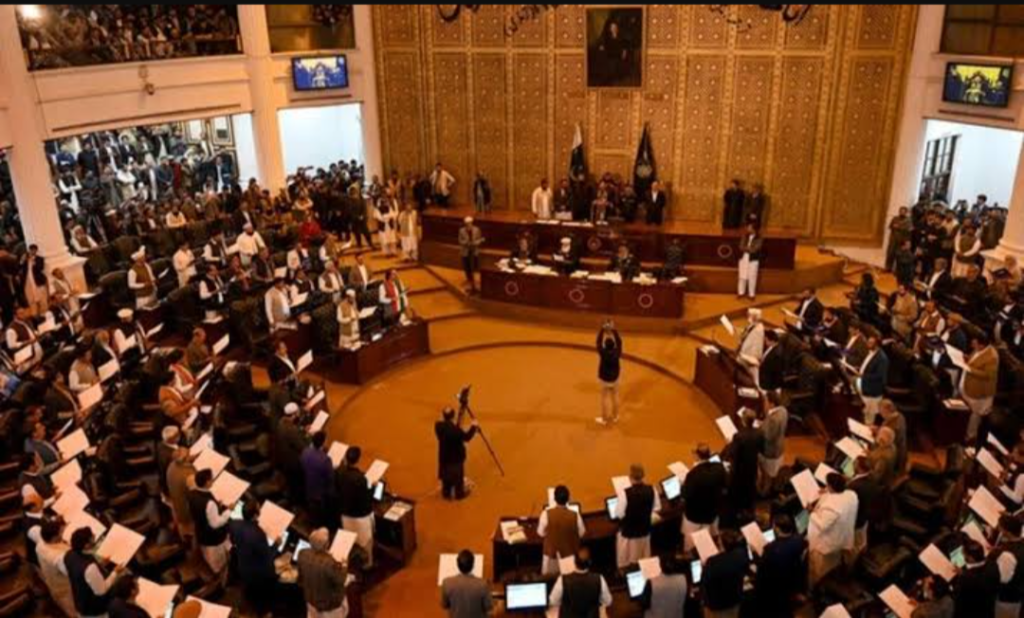
Those discontented lawmakers have now agreed to show up and participate when the assembly convenes. It’s a signal that political tensions are easing before the crucial budget vote. That matters more than it sounds. It means the government’s likely to pass its budget without drama, without walkouts, without the kind of scenes that undermine provincial governance.
The Finance Department had prepared both options—a full budget and a three-month interim plan, just in case. Now one will get tabled tomorrow, and the other goes back into the filing cabinet. What remains unclear is whether the Imran Khan consultation ever happened, or if it still matters anymore.