

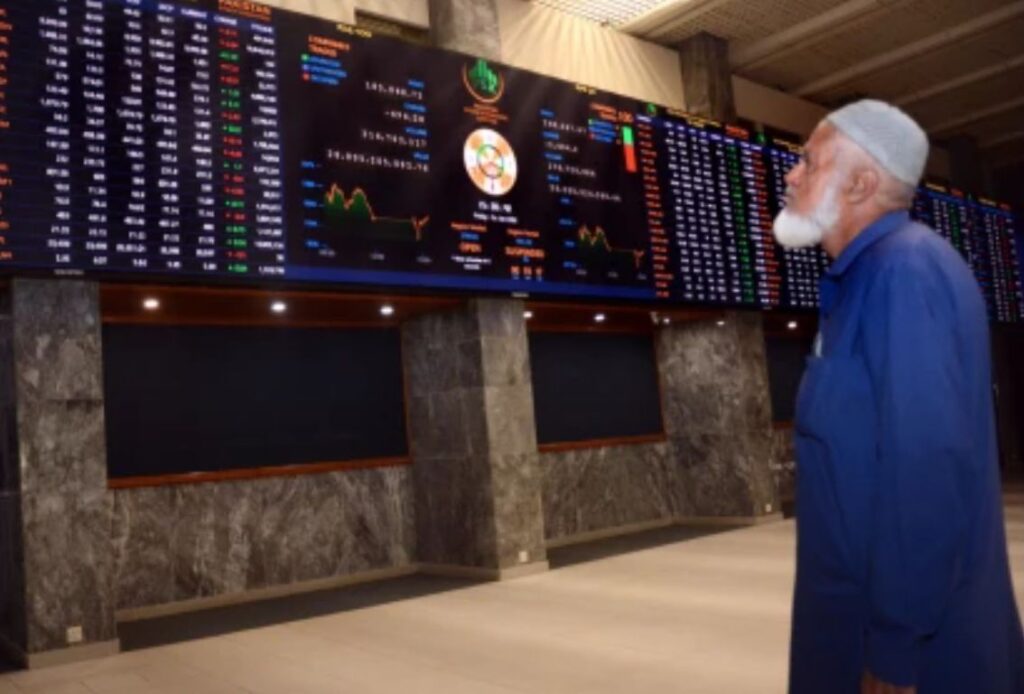

The Pakistan Stock Exchange closed Monday with the KSE-100 index at 175,746.63 points, up 3,346.73 points or 1.94% by midday. Two separate triggers drove the buying: a preliminary U.S.-Iran agreement to end hostilities and reopen the Strait of Hormuz, plus government budget announcements that signaled fiscal reform. Oil prices fell on the geopolitical news. That mattered to traders betting on cheaper energy costs and renewed regional stability.
The rally wasn’t smooth. Early session strength peaked at 176,917.76 points—a 4,367-point swing from open—before profit-taking kicked in. By filing time, gains had compressed to just under 2%. Still, the breadth told a clearer story than the headline number.
Where the money actually moved
Commercial banks, fertilizer, cement, oil explorers, and oil marketing companies all saw buying pressure. This wasn’t rotation into defensive plays. Investors were chasing cyclical exposure—sectors that benefit when geopolitical risk recedes and growth expectations rise. The Strait of Hormuz reopening matters because it affects shipping costs, energy prices, and regional trade volumes. Fertilizer stocks spiked on cheaper crude prospects; cement and banking benefit from lower financing costs.
Volume data reinforced genuine participation. 250.85 million shares traded with Rs26.78 billion turnover suggests this wasn’t thin-market noise. Real capital moved. The price action had conviction behind it, at least during the morning session when the Iran-U.S. story dominated sentiment.
Why the fade matters more than the pop
The intraday swing from +4,367 points to +3,346 points reveals something investors rarely admit: they’re uncertain whether the Iran agreement sticks. The accord is preliminary. Signing scheduled for Friday. Negotiations on Tehran’s nuclear program haven’t even started.
Pakistani traders bought the headline at 9:30am. By noon they’d trimmed positions. That’s textbook risk-off behavior when euphoria meets reality. One preliminary deal doesn’t resolve years of sanctions architecture or U.S.-Iran strategic competition. Oil markets priced in some upside already—which matters because energy import bills hit the rupee directly.
The government budget measures that fueled the second half of the rally remain unexplained in today’s reporting. What specifically changed in tax policy or spending priorities? The article doesn’t say. That’s a red flag. Markets don’t move 3,300+ points on vague announcements.
Watch Tuesday’s open. If buyers return and defend the 175,000 level, the Iran deal gains credibility as a medium-term catalyst. If volume drops and selling resumes, today’s rally was a classic relief bounce with no staying power. The Strait of Hormuz matters less than whether traders still believe it matters by Friday.