


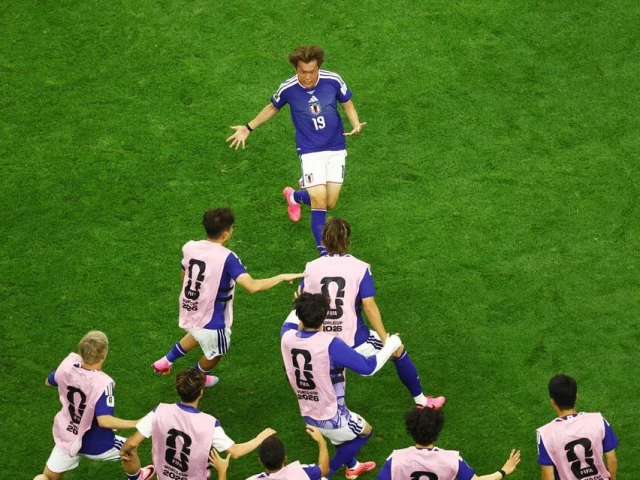

The arithmetic of a 2-2 draw often feels like a journalist’s cop-out—neither team won, both teams didn’t lose. Except when you’re watching Japan snatch an 88th-minute equaliser against the Netherlands in front of nearly 70,000 spectators, the equation becomes harder to dismiss. What unfolded in Texas on Sunday wasn’t merely a World Cup group-stage result. It exposed something both teams will need to address before knockout football begins.
For Ronald Koeman’s side, the story should have been straightforward. Virgil van Dijk’s header in the 51st minute gave them control. Crysencio Summerville’s composed finish just after the hour seemed to have settled the contest. The Netherlands had weathered Japan’s intensity, absorbed their pressure, and looked positioned to take three points. Then Daichi Kamada’s deflected effort found the back of the net, and a victory evaporated.
When Late Collapses Define Tournament Trajectories
Japan scored twice as a comeback team, first through Keito Nakamura in the 57th minute after van Dijk’s opener, then with Kamada’s deflected goal in the 88th. The pattern matters more than the scoreline itself. Hajime Moriyasu’s team demonstrated a quality that’s become their calling card in recent tournaments: the refusal to break under sustained pressure. They were outplayed for long stretches. The Dutch created clearer chances in open play. Yet Japan kept pressing, kept searching, and found the cracks.
This isn’t a secret anymore. Japan’s coaches know it. Opposing analysts know it. The question now circles back to the Netherlands: how do you prevent a team from finding those cracks when the game reaches its final moments? Koeman’s side had comfortable passages—early dominance, van Dijk’s aerial prowess, Summerville’s technical execution on the wing. None of it mattered when the game tightened and Japan went for broke.
Both squads arrived diminished by injuries, a detail rarely unimportant in these opening stages. Missing players don’t excuse defensive organization, however. They only complicate it. The Dallas Cowboys’ air-conditioned stadium hummed with organization—even their cheerleaders performed during a hydration break—but neither team’s backline could sustain a clean sheet for 90 minutes.
Dark Horse Status Demands More Consistency
Japan have never advanced past the last 16 in World Cup history, while the Netherlands remain three-time runners-up. The gap in pedigree is measurable. Yet in group stages, pedigree doesn’t guarantee results. Japan’s fans—who reportedly outnumbered their Dutch counterparts—sang nearly without pause. Their support never wavered, even when van Dijk’s header stunned the stadium into silence.
The draw leaves both teams in familiar territory: alive in the tournament, but without momentum. Sweden face Tunisia later in Group F. That fixture could reshape the entire group dynamic. A Dutch loss or Japanese victory would suddenly pivot the calculus. A Swedish win tilts the balance differently still.
Koeman will likely replay that 88th minute repeatedly—the corner, Kamada’s positioning, the deflection off van Hecke’s boot. Japan’s coaching staff will watch the same footage and see confirmation of what they already believe: stay in the game, press harder, and opposition defenses crack. One interpretation looks like regret. The other looks like vindication. Both can’t be wrong, which means this draw may only clarify itself when the next results arrive.