


A British minister landed in Islamabad this week with words of gratitude—and a check for £8 million. Hamish Falconer, the UK’s Parliamentary Under-Secretary for the Middle East, Afghanistan and Pakistan, came bearing thanks for what he called Pakistan’s “critical role” in brokering a ceasefire between the United States and Iran. It’s the kind of diplomatic praise that doesn’t land every day, and Islamabad is taking it seriously.
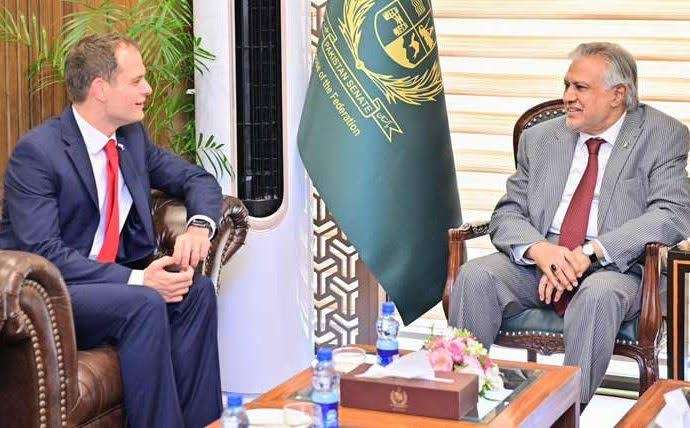
During his two-day stay, Falconer met with Deputy Prime Minister and Foreign Minister Ishaq Dar and senior government officials. The UK committed an additional £8 million to joint efforts tackling crime and illegal migration. The money isn’t abstract foreign aid bureaucracy—it’s meant for real work: strengthening visa systems, dismantling smuggling networks, and funding community programs in areas where desperation drives people to risk their lives on dangerous journeys abroad.
“We remain grateful for the role Pakistan has played in facilitating negotiations,” Falconer said, referencing the reopening of the Strait of Hormuz. The messaging from London is clear: Pakistan isn’t just a security partner or a transit country for global problems. In this moment, it’s seen as a regional stabilizer.
Where the Money Actually Goes
The funding breakdown tells you where Britain thinks Pakistan’s real vulnerabilities lie. Money will strengthen border systems, improve identity verification, and help law enforcement investigate smuggling networks. There’s also cash for community-based prevention programs—the kind of ground-level work that stops people from boarding a bus toward the Afghan border in the first place.
Anyone who’s worked in law enforcement or migration services knows how this game actually plays out. It’s not about bigger walls or harsher penalties. It’s about getting intelligence right, making sure documents check out at airports, and reaching families before the smuggler does. The funding also supports the return of people with no legal right to stay in the UK—a messy, expensive process that Britain clearly wants to speed up.
Falconer witnessed a live demonstration of joint enforcement operations during his visit. These aren’t new initiatives, but the additional money signals London is betting bigger on Pakistan’s capacity to execute them.
Afghanistan and the Bigger Picture
The US-Iran deal matters for the region’s breathing room, but Pakistan’s eastern border remains complicated. Falconer also met with Pakistan’s special representative for Afghanistan to discuss mounting tensions between the two countries. The UK offered support in tackling terrorist threats originating from Afghanistan. That’s diplomatic speak for a problem everyone in Islamabad knows intimately: porous borders and armed groups that don’t recognize them.
Britain’s framing of the partnership is revealing. It’s not about aid dependency or charity. The statement from the High Commission emphasized this as critical for “global, regional and UK national security.” Translation: what happens at Pakistan’s borders affects London’s security calculus. The deepening cooperation on migration, the funding for border systems, the focus on trafficking networks—these aren’t luxuries. They’re described as necessities.
With the US-Iran tensions cooling, at least for now, the question becomes whether regional stability actually holds or whether new fault lines crack open elsewhere along Pakistan’s borders.